Welcome to my lab web site!
I am a comparative functional morphologist interested in addressing questions about the origins and consequences of functional diversity: How are different levels of physiological and biomechanical systems modified during evolution? Are there general patterns and repeating themes in how functional systems evolve? What are the ecological implications of specific evolutionary and ontogenetic modifications of design? These and related questions are what motivate a broad research program in my lab.
Check out our latest research, YouTube channel, and blog!
Questions or comments about this site? email Chris Martin or call the lab at (530) 752-6784
last update October 5, 2009
Are you interested in joining us?
I am constantly searching for new people to join our research group. I encourage you to contact me directly if you have a solid academic background and find yourself interested in the research that we are doing. Whether you are looking for undergraduate research experience, a home for graduate studies, or postdoctoral research opportunities I would be happy to hear from you. I accept graduate students through three graduate groups here at UC Davis: the Population Biology Graduate Group, the Graduate Group in Molecular, Cellular and Integrative Physiology, and the Ecology Graduate Group. You should consult the web pages of these three excellent programs directly to learn more about how each works and which may be most appropriate for you. If you are interested in the interface between evolution, ecology and functional morphology, and you have a particular thing about fish, then this might be a good place for you.
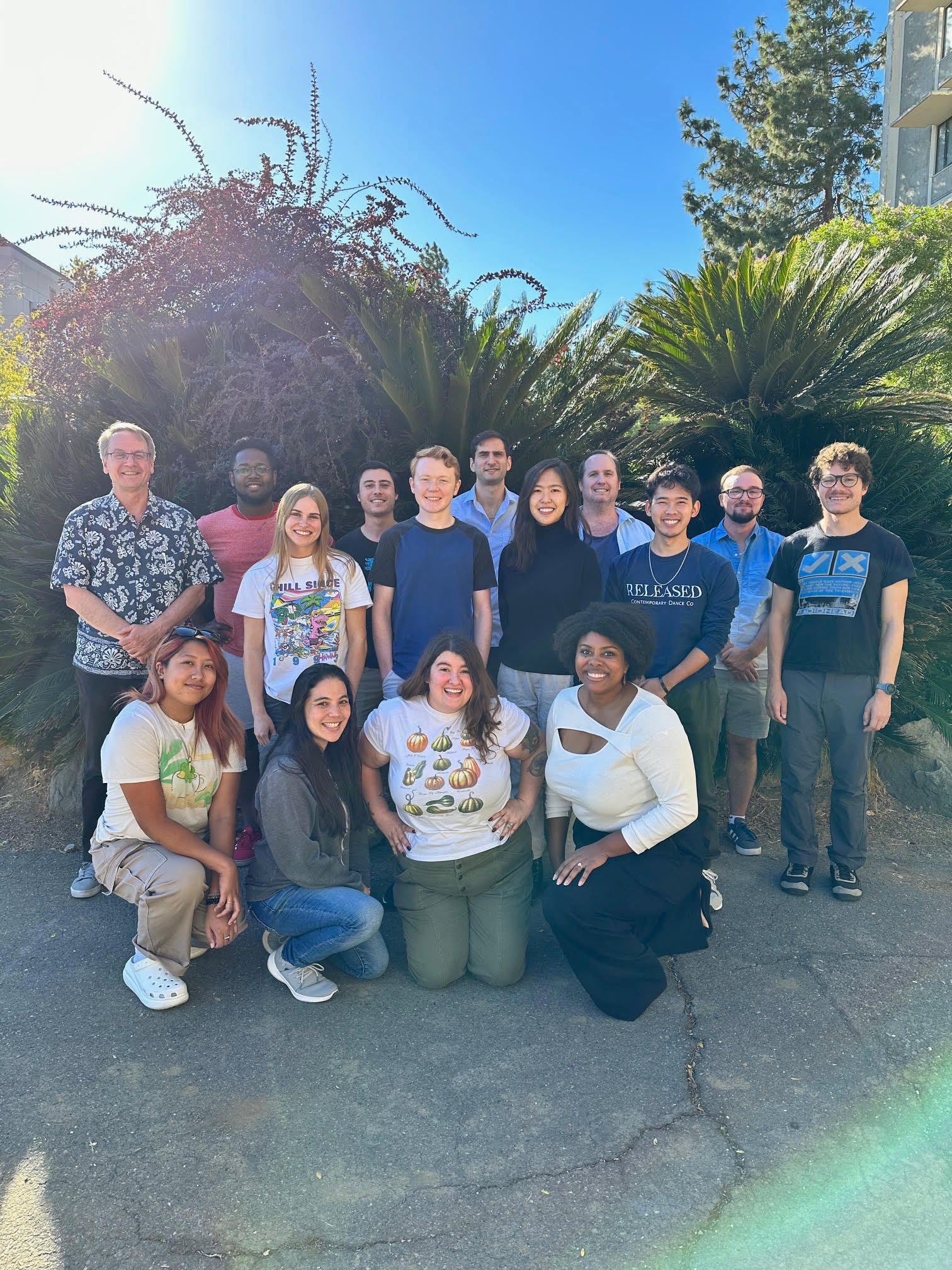
The people associated with my lab are a fairly diverse assemblage of postdocs, graduate students, and undergraduates who generally work at this interface between functional morphology, ecology and evolution. Most of the research in the lab focuses on the feeding biology of fishes. With this rich system we are able to approach questions about complexity, diversity, and plasticity of design. Increasingly our work includes generating and using phylogenies to address questions about the history of various fish groups, including their functional morphology. But, we also work at the level of populations, and a significant fraction of our effort is focused biomechanical research on single species.
There are three primary areas of ongoing research in the lab, including the biomechanics of suction feeding using particle image velocimetry and models of force and motion transmission in the musculoskeletal systems of the skull, the evolution of the pharyngeal jaw apparatus in teleost fishes, and the comparative analysis of morphological and functional diversity.